

Master of Science in Management of Smart and Sustainable Energy Systems
14.985,00 € Original price was: 14.985,00 €.13.985,00 €Current price is: 13.985,00 €.

Application form
About
Our internationally oriented Master’s program in Sustainable Energy Systems offers you the unique opportunity to acquire in-depth knowledge and valuable skills that are more in demand than ever in today’s globalized world. The program, accredited by the Ruhr-University Bochum, focuses on business, economic, and energy market issues – topics directly linked to the challenges and trends shaping our time. We provide a curriculum grounded in the latest research in business and economics, while also incorporating the dynamic developments of energy markets, capital markets, and business models. Key subjects such as digitalization, regulation, behavioral economics, climate protection, and sustainability are central to offering you a comprehensive understanding of the energy industry of the future. This interdisciplinary program integrates classical disciplines such as business administration, economics, engineering, and data science with cutting-edge topics like climate change, energy market design, and forward-looking digitalization. This holistic approach ensures that you are fully equipped to meet the evolving demands of the energy sector and the global transformation it is undergoing. Practical experience is at the heart of our program: through engaging projects, partnerships with industry leaders, and insights into current research, you will be able to apply your knowledge directly and position yourself as a driving force in the energy transition. In addition, we focus on developing your leadership and intercultural skills, preparing you to succeed in an international environment. Join an innovative program that not only equips you with the key qualifications needed for a career in the energy sector but also provides the knowledge and tools to shape a sustainable future. Take advantage of this unique opportunity and launch your career in one of the most dynamic and future-oriented fields today!
You are currently viewing a placeholder content from YouTube. To access the actual content, click the button below. Please note that doing so will share data with third-party providers.
Academics
Our internationally oriented Master’s program in Sustainable Energy Systems equips students with advanced knowledge and practical skills in the field of energy systems, with a strong focus on business, economics, and energy management. This program is rooted in cutting-edge research and addresses current market trends, including energy and capital markets, business models, digitalization, regulation, behavioral economics, climate protection, and sustainability. It is designed to respond to the rapidly evolving energy landscape, preparing students for the challenges and opportunities ahead.
By blending key disciplines such as business administration, economics, engineering, and data science with contemporary issues like digital transformation, climate change, and energy market design, this program offers a holistic and innovative approach to sustainable energy systems.
The Master’s degree program spans three full-time semesters and awards a total of 90 ECTS credits. It is based on a 210 ECTS Bachelor’s degree and emphasizes practical application and research-driven learning.
Program Structure
- First Two Semesters: Students complete 60 ECTS through 11 modules, including 8 core modules, 2 electives (5 ECTS each), and a work placement. The core modules cover essential topics for a deep understanding of sustainable energy systems, with an emphasis on business, economics, and energy management. The project work within the “Research or Industry Internship” module allows students to focus on either business-oriented or research-focused applications, offering valuable hands-on experience and specialized knowledge.
- Third Semester: Dedicated to completing the Master’s thesis and participating in a scientific colloquium, worth 20 ECTS credits. Additionally, students complete two elective modules (5 ECTS each) to further broaden their expertise.
- Click here to view the Study Schedule with Modules
Fees
The tuition fee for the master’s program is €14.985 (€4.995 per semester), plus the regular Ruhr University administration fee of currently €380 per semester. The tuition fee covers all courses and materials and includes the Deutschlandticket for public transport. Please note that tuition fees and the inclusion or exclusion of the public transportation ticket are subject to change. We recommend checking the Ruhr University administration fee page for the most up-to-date information.
Learning Objectives
Professional competence and knowledge:
- Acquisition of comprehensive, detailed and specialized knowledge in the fields of business administration, economics and regulation in the context of intelligent and sustainable energy systems.
- Deepening knowledge in related disciplines to enable a multidisciplinary perspective on the challenges and transformations in the energy sector.
Skills:
- Development and application of specialized technical or conceptual skills to solve complex and strategic problems in the energy sector.
- Ability to evaluate alternatives and develop and implement innovative solutions, even with incomplete information.
Personal competence:
- Leading groups or organizations in complex project environments, taking responsibility for processes and results.
- Promoting the professional development of team members and leading cross-departmental discussions.
- Independent definition of objectives for new application or research-oriented projects, taking into account the social, economic and cultural implications.
These learning objectives are designed to prepare students for challenging professional activities or advanced research tasks in the field of intelligent and sustainable energy systems by providing both deep technical expertise and broad interdisciplinary competencies and leadership skills.
Our program also prioritizes career readiness with a “Skills for the German Labor Market” elective area. Courses like international project management, business consulting, and scientific research methods provide essential skills for successful integration into the German workforce.
Join us in shaping the future of energy with an innovative, research-driven, and market-oriented Master’s program designed to meet the evolving demands of a rapidly changing global energy landscape.
Career
The internationally oriented Master’s program in Sustainable Energy Systems equips graduates for challenging positions in one of the most forward-looking sectors of our time. Graduates have a wide range of career opportunities in leading energy companies, energy consulting, energy policy-making, and the financial sector, where they play a key role in promoting sustainable investments and climate protection strategies. Further career paths include positions in industry, international organizations, and research institutions, where graduates can develop and implement innovative energy solutions. Additionally, there are opportunities in start-up development, sustainable mobility, and education. Graduates are well-positioned to actively shape the transformation of the energy sector.
Scholarships
For our international master’s program, we offer two attractive scholarship options:
The “Best-of-Class Awards” recognize the top students of each semester and program. Depending on your ranking, you can receive a refund of 50% or 33% of the tuition fees. This award honors exceptional academic performance and supports you on your path to success.
Additionally, we offer “Partner-Company Scholarships”, provided by our corporate partners. These scholarships not only offer financial support but also valuable networking opportunities with industry leaders and potential employers.
Schneider Electric is offering scholarships for the program.Click here to learn more about their Young Industry Leaders Scholarship.
SPIE is offering scholarships for the program as well. Click here to learn more about the SPIE Scholarship for Sustainable Solutions.
Take advantage of these unique opportunities to boost your academic and professional career!
How to apply
Application requirements
Students can only be admitted to the Master’s degree program “M.Sc. Management of Smart and Sustainable Energy Systems” if they:
- have completed Bachelor’s degree or a course of study leading to the state examination or an equivalent course of study in one of the subjects: business administration, economics or economics and comparable specialized courses such as industrial engineering, business informatics, business mathematics. The examination board decides on related subjects.
- demonstrate knowledge of business administration, mathematics for economists and microeconomics to the extent of 5 CP each,
- have sufficient knowledge of the English language, C1 level. This must be proven by TOEFL 95 (internet-based), IELTS 6.5, Duolingo English Test 125, or proof from our insitution that your undergraduate degree was delievered in the English language (offiicial document from your institution). The examination board will decide on equivalent achievements.
- can provide evidence of relevant professional experience of at least one year. The document should be from the company for which you worked at stating your start and end date, as well as your tasks.
Application Deadlines
International Applicants – deadline Mai 15th, 2027
For students from the European Union – June 15th, 2027
Early-bird discounts apply for those who apply by January 12th, 2027
Scholarship application – deadline March 1st, 2027
FAQ
Do I need work experience to apply for the master programs?
Yes. You must prove a minimum of one year work experience after completion of your university degree, including internships. So you must have work experience of at least one year in a respective field, which is prior to October 1st. Proof of this is your work contract or a reference.
How can I prove my language proficiency?
Instruction language is 100% English, so you do not need any knowledge of German. What we do need from you is prove of your proficiency in English though. This has to be CEFR level B2 or higher. We do accept TOEFL and IELTS scores as they compare. In case your prior university instruction language was English, that is sufficient proof of your proficiency and we then do not need an extra certificate of you.
German classes will be a part of your curriculum, so you can get to level B2 if you study enough.
Any other tips for my application?
Please send all your documents at once. Using the application form, you can upload all documents required at once. For communication please always use our official email addresses so that you will get a quick and reliable answer.
Can I get a Scholarship?
You can apply to independent scholarships in Germany. DAAD Scholarships (German Academic Exchange Service) is the largest scholarship organization in Germany.
The Deutschlandstipendium (Germany Scholarship) is a merit-based financial support awarded regardless of nationality or income.
There are also a few major foundations you can apply for scholarships with, those usually require social volunteering and some German language skills.
How can I get a job?
1. Types of Student Employment
| Job Type | Typical Hours | Key Characteristics |
| Werkstudent (Working Student) | Up to 20h / week | Industry-based engineering/IT work; exempt from health insurance contributions via the employer; highly valued by future employers. |
| HiWi / SHK (Research Assistant) | 5–15h / week | University institute work (lab support, coding, tutoring); English-friendly; does not count against your standard student visa work limits. |
| Minijob | Flexible | Capped at €538/month (tax-free); common for non-technical roles or campus logistics. |
Best Search Channels & Portals
- University Job Boards (Stellenwerk): Check local university career boards (e.g., Stellenwerk Dortmund, Stellenwerk Bochum, Stellenwerk Düsseldorf, and RWTH Aachen Jobbörse). Institutes frequently post English-speaking HiWi and coding roles here.
- Specialized Portals: Use de, LinkedIn, and Indeed.de using search terms like Werkstudent Data Science, Werkstudent Maschinenbau, Working Student Software, or HiWi Python.
- Campus Career Fairs: Attend events such as bonding (Aachen/Bochum), Konaktiva (Dortmund), and university-hosted career days to speak directly with engineering recruiters.
- Direct Institute Inquiries: Approach professors and PhD candidates directly in departments matching your field. Send a brief email with your CV and transcript asking if they have open HiWi projects.
Regional Industry Hubs in Rhein-Ruhr
Target companies according to the region’s specialized industrial clusters:
- Ruhr Area (Dortmund, Essen, Duisburg, Bochum):
- Focus: Software, energy systems, mechanical engineering, logistics, materials.
- Notable Employers: Thyssenkrupp, RWE, Evonik, Fraunhofer Institutes (IML, Umsicht, ISST), Materna, Adesso.
- Rhein Area (Düsseldorf, Cologne, Leverkusen):
- Focus: Telecommunications, consulting, chemicals, automotive suppliers, IT startups.
- Notable Employers: Schneider Electric, Spie, Henkel, Vodafone, Cognizant, Trivago.
Application Strategy & German CV Standards
- Standard German CV Format (Tabellarischer Lebenslauf): Keep it strictly 1–2 pages, reverse-chronological, and include relevant technical skills (programming languages, CAD software, lab equipment, simulation tools). A professional photo is standard practice in Germany, though optional.
- German Language Strategy: While software development and research labs often operate in English, engineering roles at Mittelstand (SMEs) usually require at least B1/B2 German. Highlight your current German proficiency level and active language courses on your CV.
- Enrolment Certificate (Immatrikulationsbescheinigung): Always attach proof of current student enrollment to your application, as companies need this to classify you under the Werkstudentenprivileg.
Legal & Visa Framework
- Work Limit (Non-EU Students): 140 full days or 280 half days per calendar year. Academic work at your university (HiWi) is exempt from this limit.
- Semester Limit: You cannot exceed 20 hours per week during lecture periods to maintain your primary status as a student. Full-time work is allowed during official semester breaks (vorlesungsfreie Zeit).
Can you tell me more about the cities of the area we study in?
| Feature | Düsseldorf | Bochum | Dortmund | Essen | Duisburg |
| City Character | Polished, international state capital, arts, fashion, corporate hub | Classis student town, relaxed, working-class roots, heavy cultural revival | Large industrial-turned-tech city; strong engineering and football focus | Energy & design capital; green, modern commercial center | Major logistic port, industrial, raw, highly multicultural |
| Cost of Living & Rent | High (competitive housing market, higher dining/lifestyle costs) | Low to Moderate (very affordable student housing) | Low to Moderate (good availability of budget apartments) | Moderate
(balanced prices, popular student areas) |
Lowest: easiest and cheapest city to find housing |
| Campus | EUREF Campus Düsseldorfd, HSD (Hochschule Düsseldorf) | Ruhr-Universität Bochum (RUB) | TU Dortmund | UDE (Essen Campus) | UDE
(Duisburg Campus) |
| Nightlife & Vibe | Altstadt (“longest bar in the world”), upscale lounges, riverside promenades | Bermudadreieck (dense strip of 60+ bars/clubs), unpretentious student scene | Kreuzviertel, pubs, underground clubs, massive matchday atmosphere | Rüttenscheid (Rü) cafe/bar scene, Zollverein arts | Waterfront dining at Innenhafen, indie cultural centers |
| International Feel | Very high (huge Japanese/East Asian community, multinational expat base) | High within campus; Ruhr-regional local sulture off-campus | Moderate to high; diverse immigrant communities and large international STEM cohorts | Moderate to high (strong international art & medical scene) | Very high (established immigrant communities, lange non-EU cohorts) |
What is the cost of living in The Ruhr Area?
Living costs for a student in Germany vary primarily based on housing, as basic expenses like statutory health insurance (approx. €120–€130/month) and groceries are nearly identical across North Rhine-Westphalia.
Estimated overall monthly budgets for each city:
- Düsseldorf: €1,100 – €1,450 / month (High cost of living, steep rental market)
- Essen: €800 – €1,050 / month (Affordable housing, low overall living costs)
- Bochum: €750 – €1,000 / month (Very budget-friendly, high density of student accommodations)
Monthly Cost Breakdown Comparison
| Expense Category | Düsseldorf | Essen | Bochum |
| Dormitory / Student Housing | €350 – €500 | €300 – €400 | €280 – €380 |
| Shared Flat (WG Room) | €500 – €750 | €350 – €500 | €320 – €450 |
| Private Studio Apartment | €750 – €1,100 | €450 – €650 | €450 – €600 |
| Groceries & Food | €200 – €250 | €180 – €220 | €180 – €220 |
| Health Insurance (Public) | ~€125 | ~€125 | ~€125 |
| Semester Fee / Transport | ~€50 (€300–€380/sem.) | ~€50 (€300–€380/sem.) | ~€50 (€300–€380/sem.) |
| Internet, Mobile & Utilities | €40 – €70 | €40 – €70 | €40 – €70 |
| Leisure & Personal Expenses | €150 – €250 | €100 – €180 | €100 – €160 |
Once accepted, can I be granted a deferral if I cannot yet come for technical reasons?
The deadline for a deferral is August 1st. Once you are accepted, you will be issued a contract whether you are coming or not. Once you have signed this, you have entered a contract relationship with our Academy; a place is then yours which we cannot give to someone else, and your fees are due. We then expect you. Please note that not paying your invoice from this point on would be a breach of contract. Your academic and administrative team will support you and you should address difficulties openly and directly as early as possible. In recent years, some students have not made it for the very start of the program but joined us some weeks later. This has not been a major problem. The exams concluding the first module(s) are also offered again later.
Who will be my fellow students?
Students come from diverse academic and professional backgrounds: management, consultancy, economists, advisors, analyists, legal practicioners, entrepreneurs, etc. from a number of industries: regulation authorities, consultancies, renewables, grids, oil and gas, legal advice etc.
Course language is 100% English. Students come from all over the world; in recent years, 5-10% of students were German, and 10-15% from other European countries. There was no dominating group or language. Among student’s first and third languages are regularly German, Spanish, Hindi, Arabic, English, Russian, French, Mandarin, Malay, Portuguese, Persian, Indonesian…
Am I permitted to bring my family with me to Germany for the duration of my studies?
Germany generally allows spouses and minor children to join their family members under family reunification according to § 27 AufenthG -Grundsatz des Familiennachzugs.If your marriage certificate is valid, legalized/apostilled, and translated, your family members can apply for the family reunification visa at the same time you apply for your student visa.However, the German embassy decides whether they process both applications in parallel or wait until your student visa is approved. Please contact the embassy directly to confirm the correct timing for your family’s application.
*For nationals of certain countries such as the USA, Japan, South Korea Israel, Canada, Australia, New Zealand, and the United Kingdom, entry is privileged under § 41 AufenthV – Vergünstigung für Angehörige bestimmter Staaten. They may enter Germany without a family‑reunification visa and apply directly for the residence permit for family reunification at the local immigration authority, without having to complete the visa procedure in their home country.
Why do I have to pay an administration fee at the university (also called social contribution fee)?
Additional to the tuition fee, the university asks for a regular administration fee of currently about €300 – €380 per semester. The tuition fee covers all courses and materials and the administration fee includes the Deutschlandticket for public transport. You also receive a lot of discounts with your studentcard, e.g. in the cafeteria, for cultural sites etc. Please note that tuition fees and the inclusion or exclusion of the public transportation ticket are subject to change. We recommend checking the respective university page for the most up-to-date information.
Can the university apply for a place in the student dormitory on behalf of students?
No, we cannot apply for student housing for you.
The process is as follows: After you receive your Admission, you must pay the tuition fee, sign your student contract, and send both the signed contract and the proof of tuition payment to us via email. We will then inform you when you can register at the university and pay the social contribution.
Once the social contribution has been paid, you can visit the Akafö (when you study at Ruhr university) or the website about accomodation from TU Dortmund, if you study there, to choose the student dormitory in which you would like to live during your studies and submit your application directly to the website.
What’s the latest I can arrive in Germany? My visa might delay me past the semester start.
You should arrive by the semester start, but up to one month late is acceptable with visa delays. Please let us know beforehand.
Benefits
- Practice-oriented and well-connected: Benefit from exciting industry projects, hands-on collaborations, and direct insights into current research, allowing you to apply your knowledge in practice and gain valuable professional experience.
- Enjoy studying at one of Germany’s most prestigious universities, ideally located in the vibrant Rhine-Ruhr region, one of Europe’s leading economic hubs.
- Cutting-edge and up-to-date: The program is based on the latest research findings and incorporates current developments in energy and financial market research, as well as forward-thinking business models.
- Globally focused: With targeted leadership training and intercultural skills, you will be fully prepared for a career in an international environment and equipped to tackle global challenges successfully.
- Diverse career opportunities: The combination of business expertise and technical knowledge opens the door to a wide range of exciting career paths in the growing energy sector.
- Actively shape the future: Gain the skills to play a key role in the transition to sustainable energy systems and position yourself as a driving force in the energy transformation.
- Improve your language skills through intensive exchanges and practical course content.
- Learn in a multicultural environment: Work alongside students from around the world and benefit from the cultural diversity and international perspectives of your peers
Advice & contact
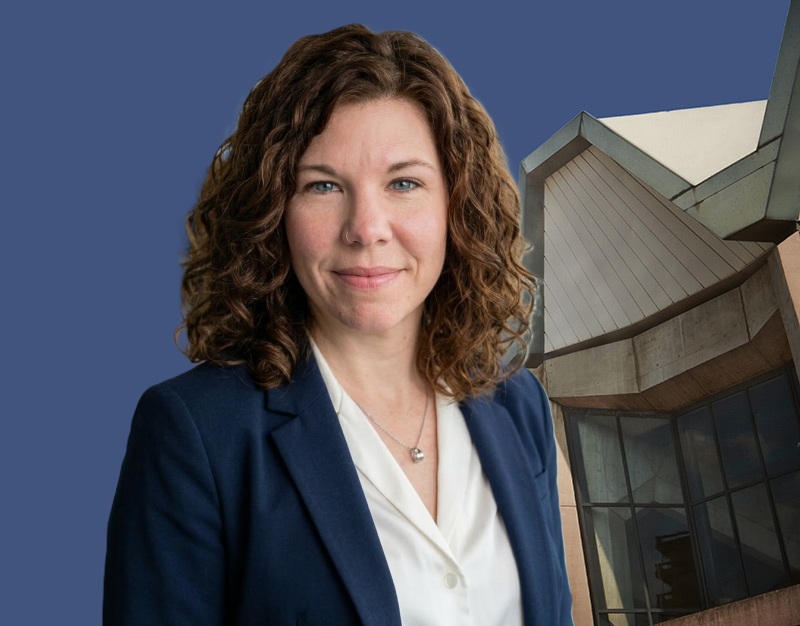
Lecturers

Prof. Dr. Andreas Löschel
Prof. Dr. Andreas Löschel is the Chair of Environmental/Resource Economics and Sustainability at Ruhr University Bochum (RUB) and the university’s Envoy for Sustainability. He has led the German government’s Energy Expert Commission since 2011 and directs the Virtual Institute Smart Energy North Rhine-Westphalia (VISE). A Lead Author for the IPCC’s Fifth and Sixth Assessment Reports, he is also a member of the German National Academy of Science and Engineering (acatech).
Prof. Löschel has advised the European Commission, OECD, World Bank, and national ministries on energy and climate policy. He is frequently ranked among the 50 most influential economists in Germany by Frankfurter Allgemeine Zeitung (F.A.Z.).